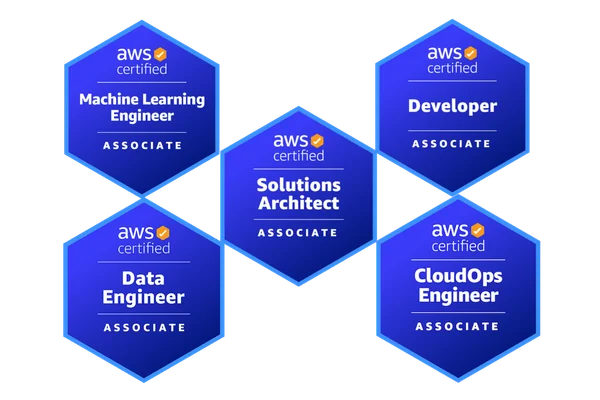






AWS Certified CloudOps Engineer Practice Exams

1 of 12 AWS CloudOps Engineer Exams | 10 Practice Questions

AWS CloudOps Engineer – Associate Exam Facts

  • Exam code: SOA-C03
  • 65 total questions: 50 scored and 15 unscored
  • Question types are multiple choice and multiple response
  • Scaled score from 100–1,000 with a passing score of 720
  • Target candidate: at least 1 year operating AWS workloads and at least 1 year in a related operations role
  • Compensatory scoring model with no penalty for guessing

SOA-C03 Content Domains & Weighting

  • Domain 1: Monitoring, Logging, Analysis, Remediation, and Performance Optimization – 22%
  • Domain 2: Reliability and Business Continuity – 22%
  • Domain 3: Deployment, Provisioning, and Automation – 22%
  • Domain 4: Security and Compliance – 16%
  • Domain 5: Networking and Content Delivery – 18%

The Trick to IT Certification Success

Stop wasting time. Download this proven Certification Success Study Plan for free.

Practice

Do the practice tests

Prompt

AI driven training

Perform

Learn by doing

Pass

Get certified in half the time

AWS Certified CloudOps Engineer – Associate Exam Topics

Exam Basics

  • Exam code: SOA-C03
  • Format: 65 total questions, including 50 scored and 15 unscored questions
  • Question types: multiple choice and multiple response
  • Scoring: scaled from 100–1,000 with a passing score of 720
  • Scoring model: compensatory across the entire exam
  • There is no penalty for guessing
  • The exam validates the ability to deploy, manage, operate, monitor, secure, and troubleshoot AWS workloads

Target Candidate Experience

  • At least 1 year deploying, managing, troubleshooting, networking, and securing workloads on AWS
  • At least 1 year in an operations-related role such as system administration
  • Familiarity with operating systems, scripting, networking, monitoring, and logging
  • Familiarity with containers, CI/CD practices, and Git
  • Hands-on experience with the AWS Management Console and AWS CLI
  • Experience using infrastructure as code and AWS CloudFormation

Domain 1: Monitoring, Logging, Analysis, Remediation, and Performance Optimization (22%)

  • Configure monitoring and logging with Amazon CloudWatch, AWS CloudTrail, and Amazon Managed Service for Prometheus
  • Install and manage the CloudWatch agent on EC2 instances, ECS clusters, and EKS clusters
  • Create and troubleshoot CloudWatch alarms, composite alarms, dashboards, and SNS notifications
  • Use EventBridge to route, enrich, and deliver operational events
  • Automate remediation with Lambda, Systems Manager Automation, CloudTrail, Auto Scaling, and AWS User Notifications
  • Create and run Systems Manager Automation runbooks
  • Analyze performance and availability metrics to identify operational problems
  • Optimize EC2, EBS, S3, EFS, FSx, RDS, and database performance
  • Use RDS Performance Insights, RDS Proxy, multipart uploads, Transfer Acceleration, DataSync, and lifecycle policies
  • Optimize placement groups, EC2 networking, storage configurations, and shared file systems

Domain 2: Reliability and Business Continuity (22%)

  • Configure scaling mechanisms for compute, database, and container workloads
  • Recognize when to use horizontal scaling, vertical scaling, caching, or managed scaling
  • Use CloudFront and ElastiCache to improve performance and scalability
  • Configure scaling for Amazon RDS and DynamoDB
  • Configure and troubleshoot Elastic Load Balancing
  • Configure Route 53 health checks and highly available routing
  • Implement Multi-AZ and other fault-tolerant configurations
  • Identify and remove single points of failure
  • Maintain availability during application or infrastructure failures
  • Automate backups and snapshots with AWS Backup
  • Protect EC2, EBS, RDS, S3, DynamoDB, and file-system data
  • Select restore and disaster recovery strategies based on RTO, RPO, and cost
  • Use point-in-time recovery, snapshots, versioning, and documented recovery procedures

Domain 3: Deployment, Provisioning, and Automation (22%)

  • Create and manage Amazon Machine Images and container images
  • Build and maintain images with EC2 Image Builder
  • Provision infrastructure with AWS CloudFormation and the AWS CDK
  • Diagnose CloudFormation failures, permissions problems, and subnet-sizing issues
  • Share resources across accounts and Regions with AWS RAM
  • Deploy resources across accounts with CloudFormation StackSets
  • Understand and implement common deployment strategies
  • Use Terraform, Git, and other third-party deployment tools where appropriate
  • Automate operational processes with AWS Systems Manager
  • Build event-driven automation with Lambda, S3 Event Notifications, and EventBridge
  • Replace manual administrative work with repeatable runbooks, scripts, and event-driven workflows

Domain 4: Security and Compliance (16%)

  • Configure IAM users, roles, policies, password policies, MFA, federation, and resource policies
  • Apply IAM policy conditions and troubleshoot access failures
  • Audit permissions with CloudTrail, IAM Access Analyzer, and the IAM policy simulator
  • Implement secure multi-account environments with AWS Organizations
  • Apply service control policies and organizational controls
  • Remediate security findings from AWS Trusted Advisor
  • Enforce Region, service, account, and organizational compliance requirements
  • Implement data classification and encryption at rest with AWS KMS
  • Configure encryption in transit and certificates with AWS Certificate Manager
  • Store credentials and secrets securely with AWS Secrets Manager
  • Interpret and remediate findings from Security Hub, GuardDuty, AWS Config, and Amazon Inspector

Domain 5: Networking and Content Delivery (18%)

  • Configure VPCs, subnets, route tables, security groups, network ACLs, and internet gateways
  • Configure NAT gateways and egress-only internet gateways
  • Implement private connectivity with VPC endpoints, PrivateLink, peering, Transit Gateway, and VPN
  • Review AWS WAF, AWS Shield, AWS Network Firewall, and Route 53 Resolver DNS Firewall
  • Optimize network architectures for cost and operational efficiency
  • Configure DNS and Route 53 Resolver
  • Implement Route 53 routing policies and DNS query logging
  • Configure Amazon CloudFront and AWS Global Accelerator
  • Troubleshoot route tables, subnets, security groups, network ACLs, NAT gateways, and Transit Gateway
  • Interpret VPC Flow Logs, ELB logs, WAF logs, CloudFront logs, and container logs
  • Troubleshoot CloudFront caching, private connectivity, and hybrid networking
  • Use VPC Reachability Analyzer and CloudWatch network-monitoring tools

Outside the Primary Exam Scope

  • Designing large distributed architectures
  • Designing complete CI/CD pipelines
  • Designing complex hybrid and multi-VPC networks
  • Developing application software
  • Defining organization-wide security, compliance, and governance requirements
  • Developing ransomware-defense strategies
  • Performing formal capacity planning
  • Analyzing total cost of ownership
  • Managing AWS billing and invoicing

What the Exam Emphasizes

  • Implementing and operating AWS environments rather than designing large application architectures
  • Monitoring workloads and responding to operational events
  • Troubleshooting failures by interpreting metrics, logs, alarms, and service behavior
  • Automating recurring operational and administrative tasks
  • Maintaining reliability, availability, backup, restore, and disaster recovery capabilities
  • Applying security controls and remediating compliance findings
  • Diagnosing AWS networking, DNS, connectivity, routing, and caching problems

Key Monitoring, Operations, and Automation Services

  • Amazon CloudWatch, AWS X-Ray, Amazon Managed Grafana, and Amazon Managed Service for Prometheus
  • AWS CloudTrail, AWS Config, AWS Systems Manager, AWS Compute Optimizer, and AWS Trusted Advisor
  • AWS CloudFormation, AWS CDK, CloudFormation StackSets, AWS RAM, and AWS Service Catalog
  • AWS Auto Scaling, Amazon EventBridge, Amazon SNS, Amazon SQS, AWS Step Functions, and AWS Lambda
  • AWS Organizations, AWS Control Tower, IAM Identity Center, and service control policies
  • Amazon VPC IP Address Manager and AWS User Notifications

Key Compute, Container, Storage, and Database Services

  • Amazon EC2, EC2 Image Builder, AWS Lambda, Amazon ECR, Amazon ECS, and Amazon EKS
  • Amazon EBS, Amazon EFS, Amazon FSx, Amazon S3, AWS Storage Gateway, and AWS Backup
  • Amazon RDS, Amazon Aurora, Aurora Serverless v2, and Amazon RDS Proxy
  • Amazon DynamoDB, DynamoDB Accelerator, and Amazon ElastiCache
  • AWS DataSync for managed data transfer
  • Amazon Athena and Amazon Data Firehose for querying and delivering operational data

Key Networking, Identity, and Security Services

  • Amazon VPC, VPC endpoints, VPC peering, VPC Flow Logs, and VPC Reachability Analyzer
  • AWS PrivateLink, AWS Transit Gateway, AWS Client VPN, and AWS Site-to-Site VPN
  • Amazon Route 53, Route 53 Resolver DNS Firewall, CloudFront, and AWS Global Accelerator
  • Elastic Load Balancing, Elastic IP addresses, and Amazon Application Recovery Controller
  • AWS Network Firewall, AWS WAF, and AWS Shield
  • AWS IAM, IAM Access Analyzer, IAM Identity Center, and service control policies
  • AWS KMS, AWS Certificate Manager, and AWS Secrets Manager
  • Amazon GuardDuty, Amazon Inspector, AWS Security Hub, AWS Config, and Amazon Macie
  • Security groups and network ACLs
  • AWS Cost Explorer, AWS Cost and Usage Reports, and Savings Plans

How to Prepare for SOA-C03

  1. Practice CloudWatch metrics, logs, alarms, dashboards, composite alarms, and CloudWatch agents
  2. Build Systems Manager runbooks and automate remediation with Lambda and EventBridge
  3. Review backup, restore, RTO, RPO, snapshots, versioning, and disaster recovery strategies
  4. Practice Auto Scaling, load balancing, Route 53 health checks, caching, and Multi-AZ configurations
  5. Deploy and troubleshoot infrastructure with CloudFormation, StackSets, and the AWS CDK
  6. Practice IAM policy evaluation, access troubleshooting, federation, multi-account controls, and SCPs
  7. Review KMS, ACM, Secrets Manager, GuardDuty, Security Hub, AWS Config, and Inspector
  8. Build and troubleshoot VPC routing, security groups, network ACLs, NAT gateways, Transit Gateway, and private connectivity
  9. Interpret VPC Flow Logs, ELB logs, WAF logs, CloudFront logs, CloudTrail events, and container logs
  10. Practice performance tuning for EC2, EBS, S3, EFS, FSx, RDS, DynamoDB, and network configurations
Join the Golden Jacket Club

Get AWS AI Practitioner Certified FAST!

Choose the Membership Plan that Works Best for You

Loading available offers...